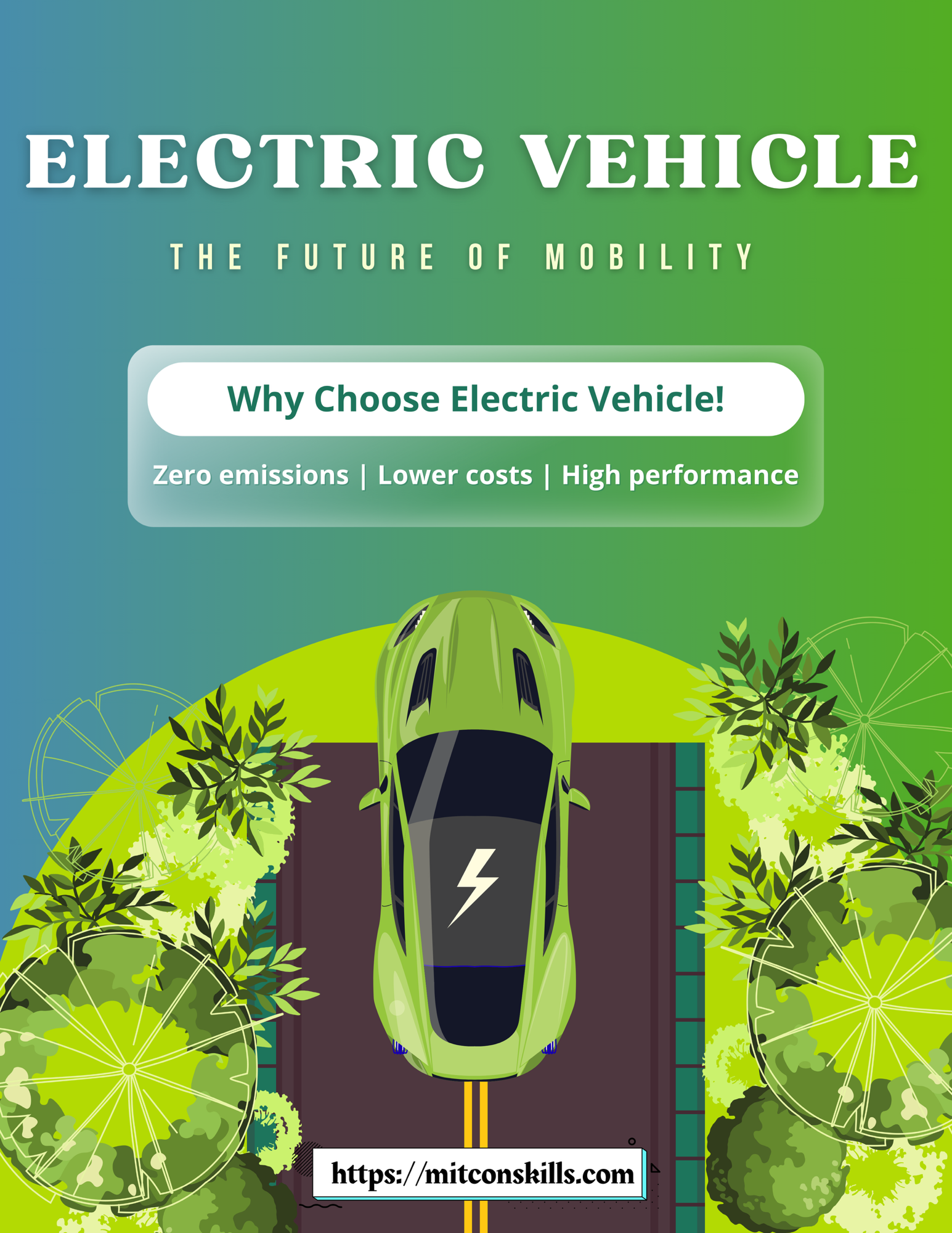
Electric Vehicles (EVs) are vehicles powered wholly or partially by electricity rather than conventional fossil fuels, using electric motors and onboard energy storage most commonly rechargeable batteries to generate motion, and they represent one of the most significant transformations in the history of transportation. Unlike traditional internal combustion engine vehicles that rely on burning petrol or diesel, EVs operate by drawing electrical energy from batteries that can be charged from external power sources, such as home chargers, public charging stations, or renewable energy systems, making them fundamentally cleaner, quieter, and more energy-efficient. At a basic level, EVs convert electrical energy into mechanical energy with far fewer moving parts, which results in higher efficiency, smoother driving performance, and substantially lower maintenance requirements. There are several categories of EVs, including Battery Electric Vehicles (BEVs), which run entirely on electricity; Plug-in Hybrid Electric Vehicles (PHEVs), which combine an electric motor with a traditional engine; and Hybrid Electric Vehicles (HEVs), which use electricity primarily to support fuel efficiency rather than full electric driving.
As of early 2026, EVs have evolved far beyond their initial perception as niche or experimental products and are now a mainstream mobility solution adopted by individuals, businesses, and governments worldwide. Advances in battery technology have significantly increased driving range, reduced charging times, and lowered costs, making EVs practical for daily commuting, long-distance travel, and commercial use. Modern EVs are also highly digital by design, integrating intelligent software systems that manage battery health, optimize energy usage, enable real-time diagnostics, and support over-the-air updates, effectively turning vehicles into connected, upgradable platforms rather than fixed mechanical products. From an environmental perspective, EVs play a critical role in reducing greenhouse gas emissions and urban air pollution, particularly when paired with renewable energy sources, thereby supporting global climate goals and improving public health. Economically, EVs offer compelling long-term value through lower fuel costs, reduced servicing needs, and improved total cost of ownership, especially for fleets and high-utilization vehicles.
Charging infrastructure has expanded rapidly across cities, highways, workplaces, and residential areas, improving accessibility and addressing earlier concerns around range and convenience. While challenges such as grid capacity, charging standardization, and battery recycling remain, they are increasingly being addressed through smart energy management, infrastructure investment, and circular-economy initiatives. In essence, Electric Vehicles are not simply a new type of car; they represent a broader shift toward intelligent, sustainable, and energy-integrated mobility, reshaping how people and goods move while laying the foundation for a cleaner, more efficient, and technologically advanced transportation ecosystem that is accessible and understandable to consumers, businesses, and societies alike.